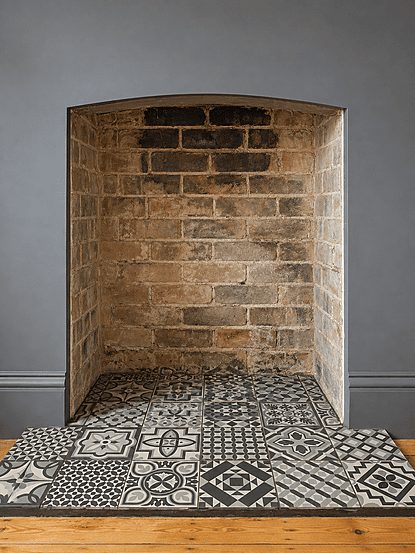
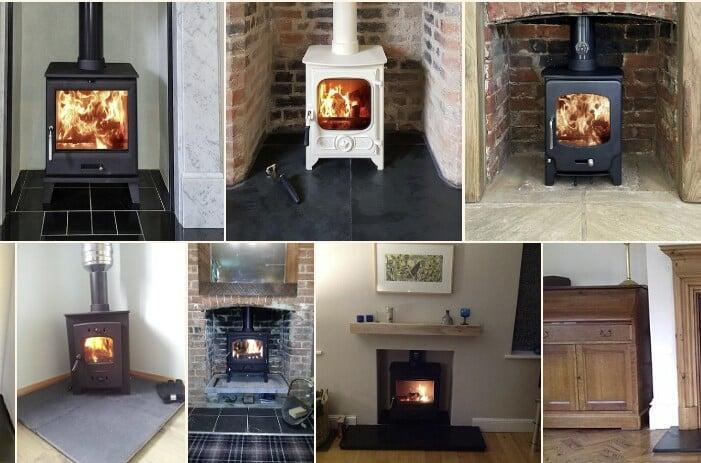
You should have two hearths under your logburner.
A regular hearth (often called a superimposed or decorative hearth) is a thin, surface-level layer of stone, glass, or tile placed on top of an existing floor purely to catch stray sparks and embers.
Constructional Hearth
Structural: Built deep into the floor to handle immense weight.
Thick: Requires a minimum thickness of 125mm to 250mm of solid masonry.
Essential: Mandatory for open fires, deep fireplace recesses, and high-heat stoves.
Safety: Stops extreme, long-term heat conduction from setting wooden floor joists on fire.
Regular Hearth (Superimposed)
Surface-level: Sits entirely on top of your finished floor (like wood or carpet).
Thin: Requires a minimum thickness of just 12mm.
Decorative: Made of aesthetic materials like slate, granite, or toughened glass.
Specific: Only allowed for modern freestanding stoves certified not to heat the ground above 100°C.
Purpose
The constructional hearth acts as the hidden, rugged safety foundation beneath the floorboards, while the regular hearth sits on top as the clean, attractive finish you actually see in the room.
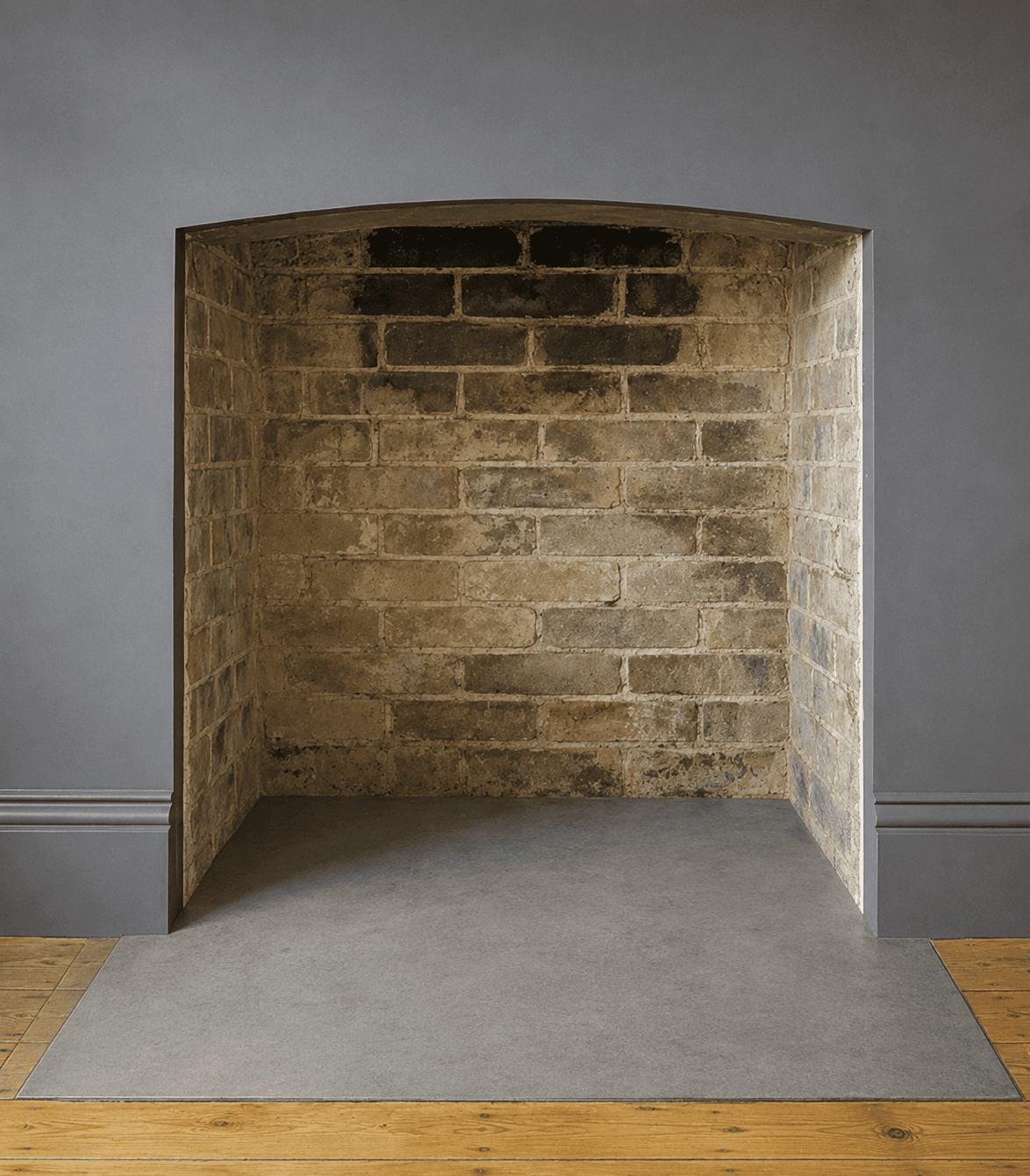
The difference
Constructional hearth [left] goes down first and the decorative hearth is laid on top to clearly mark out the danger area around the fireplace or logburner.