A chimney fire requires 999 - Fire Service.
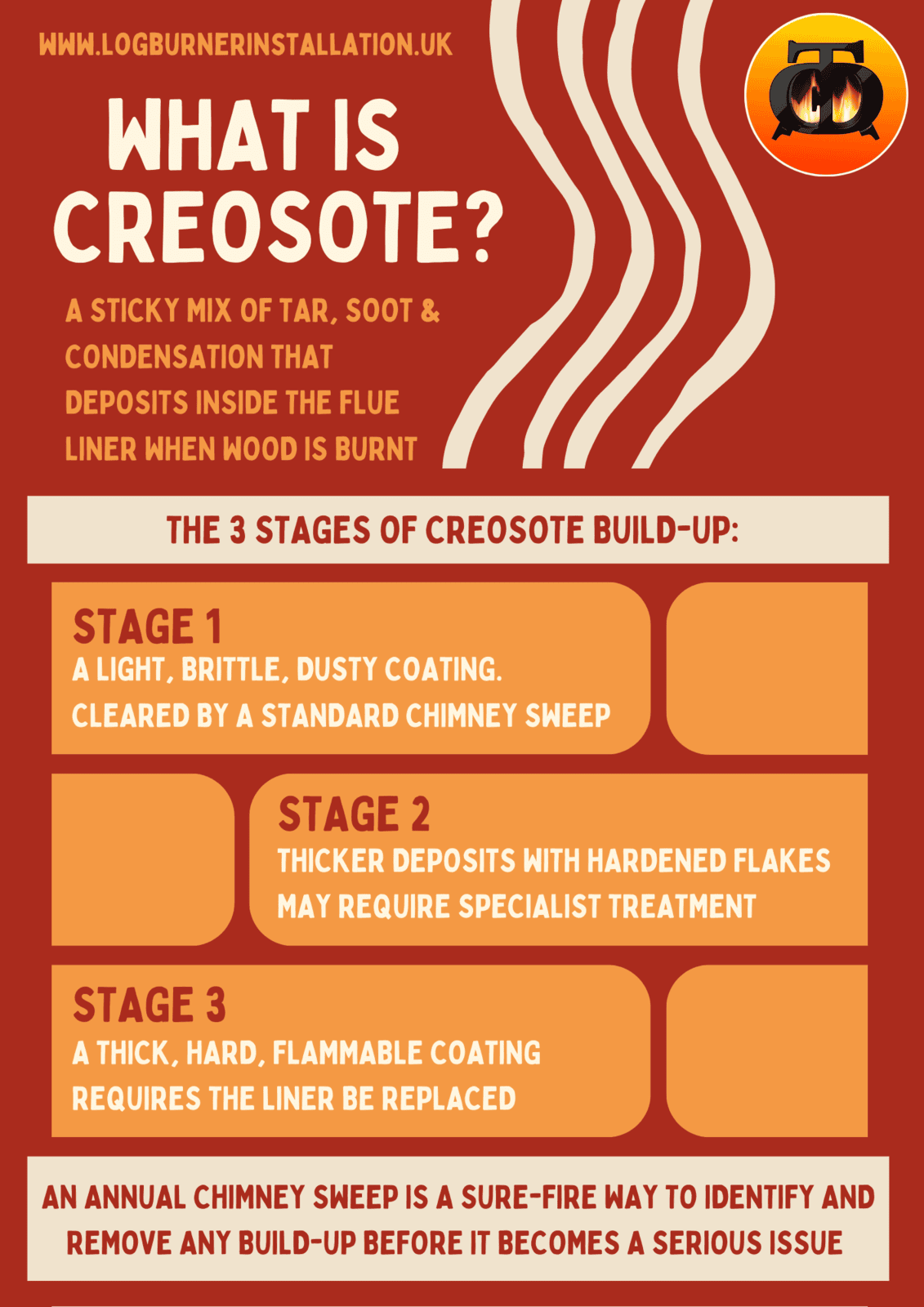
When wood doesn’t burn completely, smoke contains gases, moisture, and tiny particles.
As that smoke rises and cools, it forms creosote inside the flue.
A chimney fire requires the Fire Service to visit and could lead to a house fire.
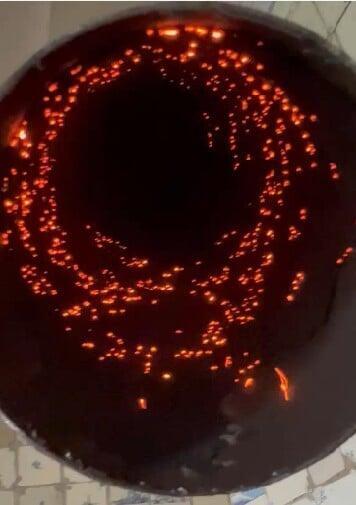
Causes of Creosote
Burning unseasoned/wet wood
Running fires too low or “slumbering”
Poor airflow
Infrequent chimney sweeping. Book a sweep now.
Bird nests, fallen masonry, or damaged liners can restrict airflow and trap heat.
Bird nests, fallen masonry, or damaged liners can restrict airflow and trap heat.
Different stages:
Stage 1: Sooty/flaky — easier to remove
Stage 2: Crunchy/tar-likeunchy/tar-likeunchy/tar-likeunchy/tar-likeunchy/tar-like
Stage 2: Crunchy/tar-likeunchy/tar-likeunchy/tar-likeunchy/tar-likeunchy/tar-like
Stage 3: Glazed creosote — extremely dangerous and difficult to cleanlazed creosote — extremely dangerous and difficult to cleanlazed creosote — extremely dangerous and difficult to cleanlazed creosote — extremely dangerous and difficult to cleanlazed creosote — extremely dangerous and difficult to clean
Causes of Ignition
Cardboard or rubbish is burned
Too much fuel is added at once
Air vents are left fully open for long periods
Incorrect stove installation, undersized flues, or connecting the wrong appliance to a chimney can overheat the system.
Incorrect stove installation, undersized flues, or connecting the wrong appliance to a chimney can overheat the system.
What to look out / listen for
Loud roaring or rumbling noise
Extremely hot chimney breast or flue
Sparks or flames from the chimney pot outside
Dense smoke
Burning smell
Call 999 if you think you have a chimney fire then close the vents on your stove.
Do not open the door or add water.