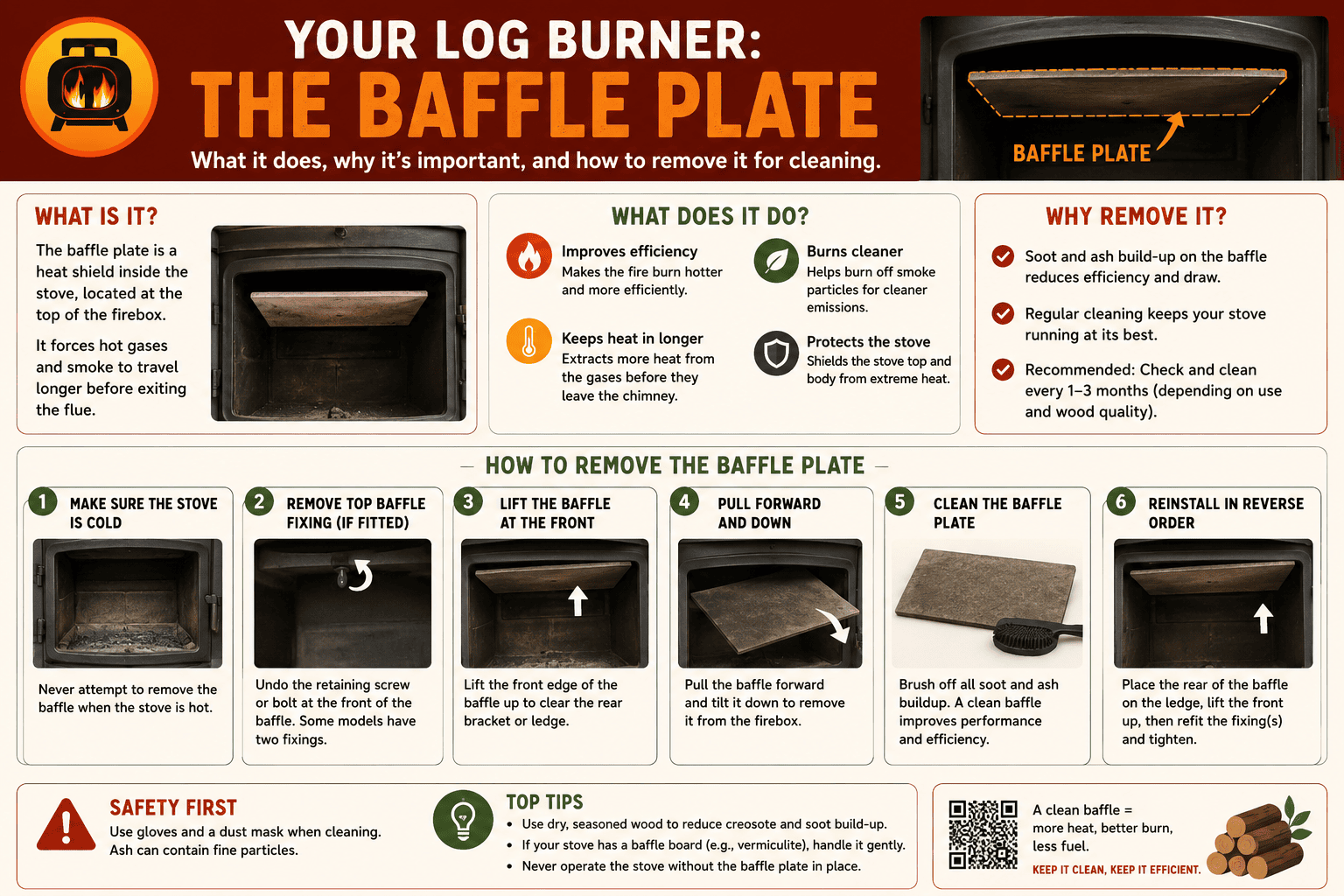
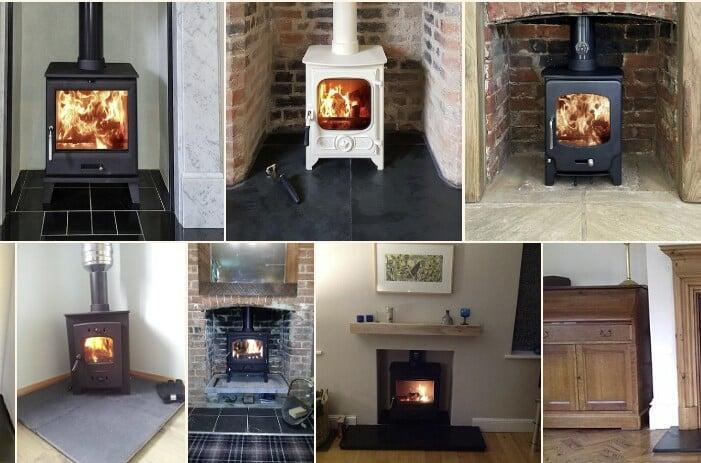
How does your chimney work?
This can be for a number of reasons but first we need to understand how the chimney works and how air is drawn up and out of it.
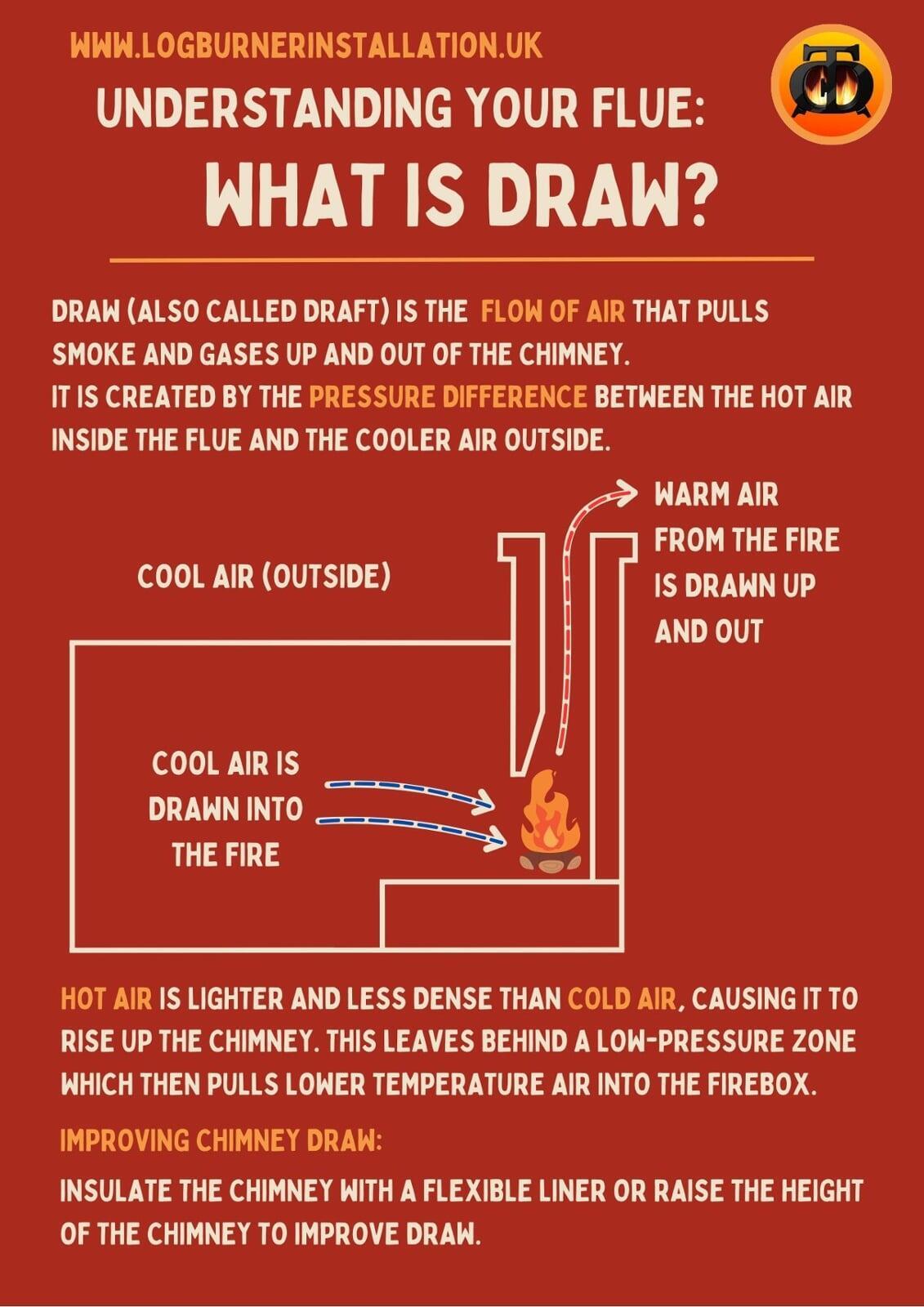
Chimney draw is the natural airflow that pulls smoke and combustion gases up and out of the chimney.
How it works
The fire heats the air inside the flue.
Hot air is lighter and less dense than the cooler air outside.
The hot air rises up the chimney.
As it rises, it creates a slight low-pressure area in the stove/fireplace.
This pulls fresh, cooler air into the fire, supplying oxygen for combustion.
Good draw:
Removes smoke efficiently.
Helps the fire burn cleaner and hotter.
Improves stove performance.
Reduces the risk of smoke entering the room.
How to improve chimney draw
Install an insulated flexible flue liner.
Increase chimney height where appropriate.
Ensure the flue is warm and free from blockages.
Provide adequate air supply to the room.
A chimney works like a natural vacuum. Hot air rises up the flue, which pulls fresh air into the fire and carries smoke safely outside.
The more air that the chimney pulls, the bigger and hotter the flames will be.
The main causes of an out of control fire are problems with the air control, poorly maintained appliance or simply
using the wrong fuel. A stove that burns permanently too hot can warp and become unusable.
More on overburning >>
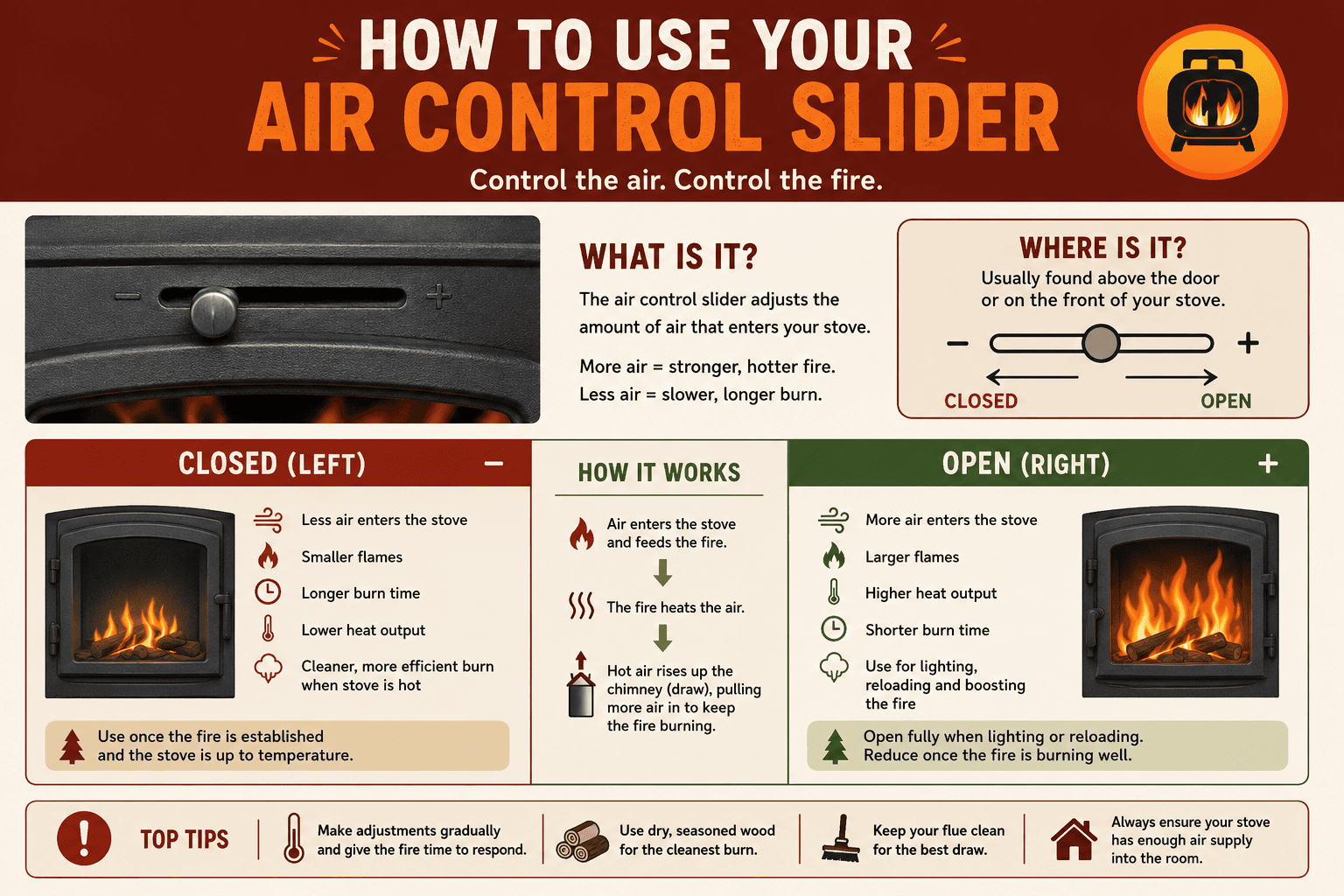
Air controls stuck or left open
Logburners are controlled by air controls, some times one, often two.Usually they slide to let more air in or close it off. Sometimes they tighten and untighten like a screw.
If your control is damaged or stuck you will not be able to control your logburner. Contact us for a service if this should happen.
Using the wrong fuel
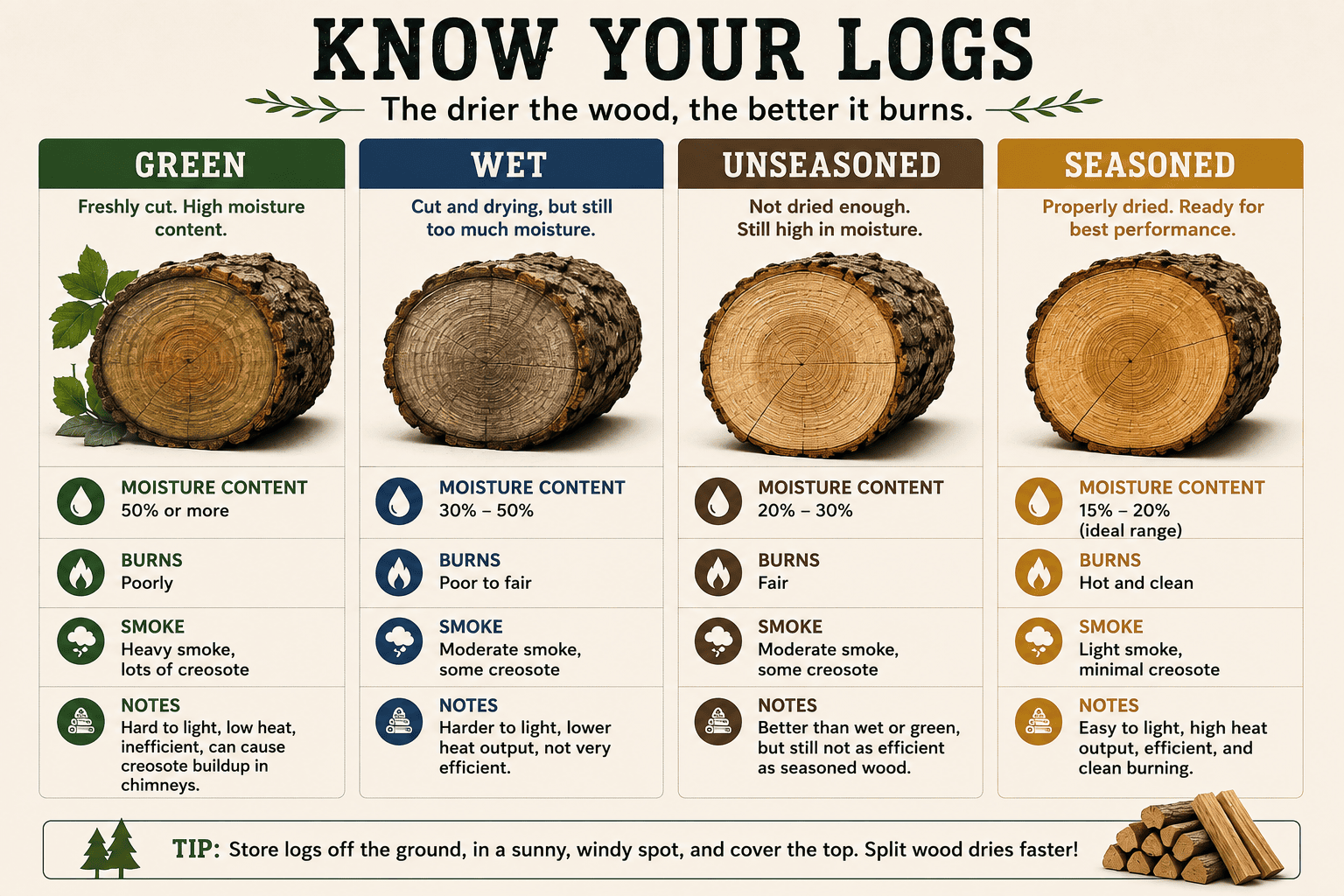
Kiln-dried wood has a very low moisture content, This means it burns hot and fast. It is great for starting a fire but you may want to pop a seasoned log on the fire if it is burning too hot.Log burners are designed to use seasoned wood in order to achieve their advertised efficiency and clean burning ratings.Seasoned wood means that the tree has been left to dry out for around 2 years and has a moisture content under 20%. It is sometimes referred to as 'green' or 'wet' which is different from wood that has been left out in the rain.
Freshly cut branches from your apple tree are classed as unseasoned wood should not be burned until fully seasoned.
Smokeless coal can also be burned but it is not usually as efficient whilst it does tend to burn hot quickly.
Logburners are not designed to burn household rubbish and indeed this can damage both it and your liner which can be an expensive lesson to learn.
Look for the ready to burn logo when buying fuel to make sure it is of good quality.
Poorly maintained appliance
Another way for air to be getting into your logburner would be through the rope seals on the door or the ceramic glass. If these are worn, missing or have gaps in them then too much air will be entering the appliance and your flames will be hard to control.