The benefits of fitting a liner
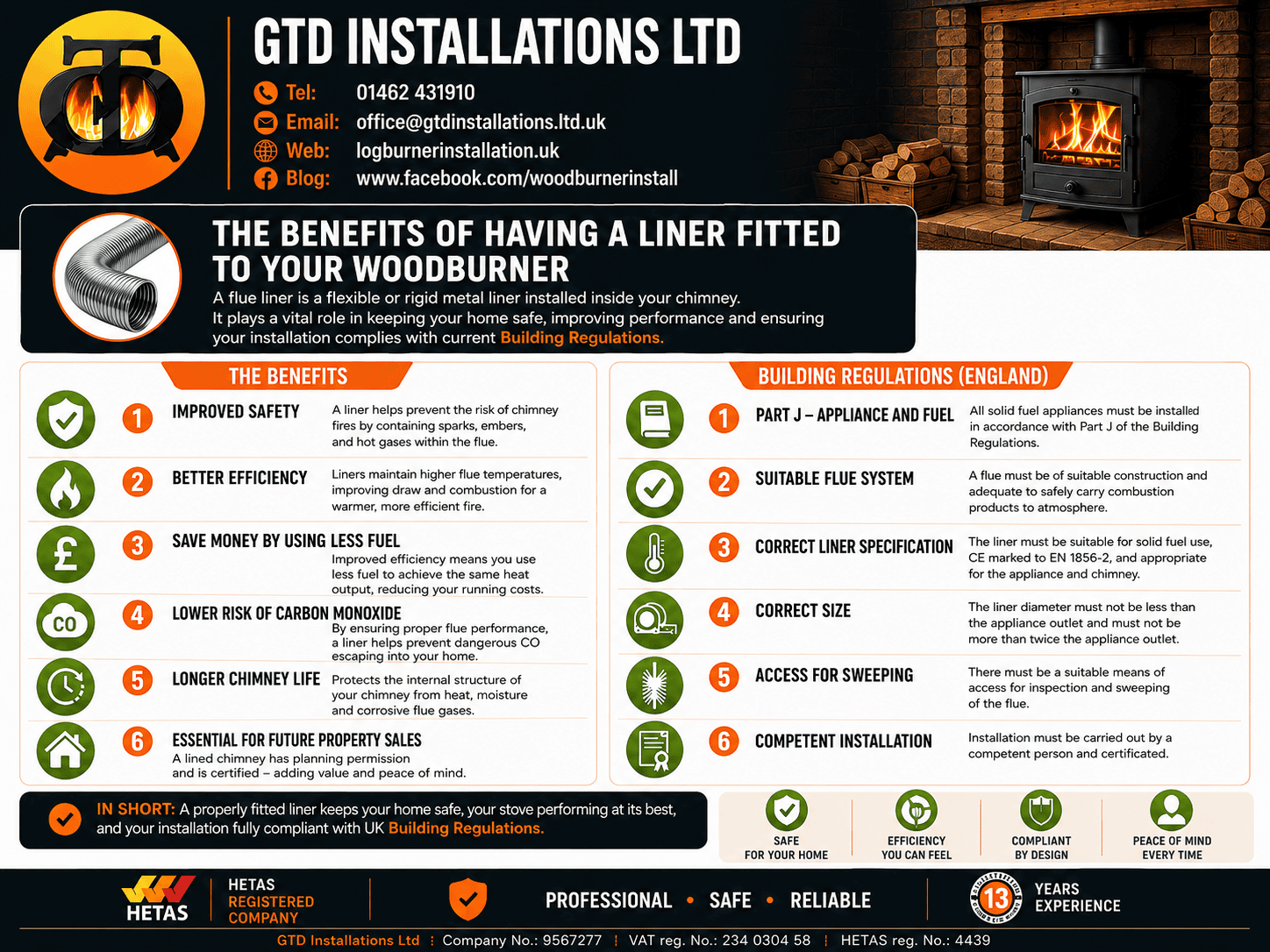
A flue liner is a metal tube installed inside a chimney that improves safety, performance, and compliance with UK Building Regulations.
Key Benefits
Improved Safety – Helps prevent chimney fires by containing sparks, embers, and hot gases.
Better Efficiency – Maintains higher flue temperatures, improving stove draw and combustion.
Lower Fuel Costs – More efficient burning means less fuel is needed to produce the same heat.
Reduced Carbon Monoxide Risk – Helps ensure combustion gases are safely expelled from the home.
Longer Chimney Life – Protects the chimney structure from heat, moisture, and corrosive gases.
Added Value for Property Sales – A properly lined and certified chimney can provide reassurance to future buyers.
Building Regulation Requirements (England)
A compliant installation should:
Meet Part J of the Building Regulations.
Use a suitable flue system capable of safely carrying combustion gases.
Have a correctly specified liner suitable for solid fuel appliances and CE marked to EN 1856-2.
Be the correct diameter for the appliance.
Include access for inspection and sweeping.
Be installed and certified by a competent person (e.g., a HETAS-registered installer).
A properly fitted chimney liner improves safety, efficiency, and compliance while helping to reduce fuel costs, protect the chimney, and provide peace of mind.